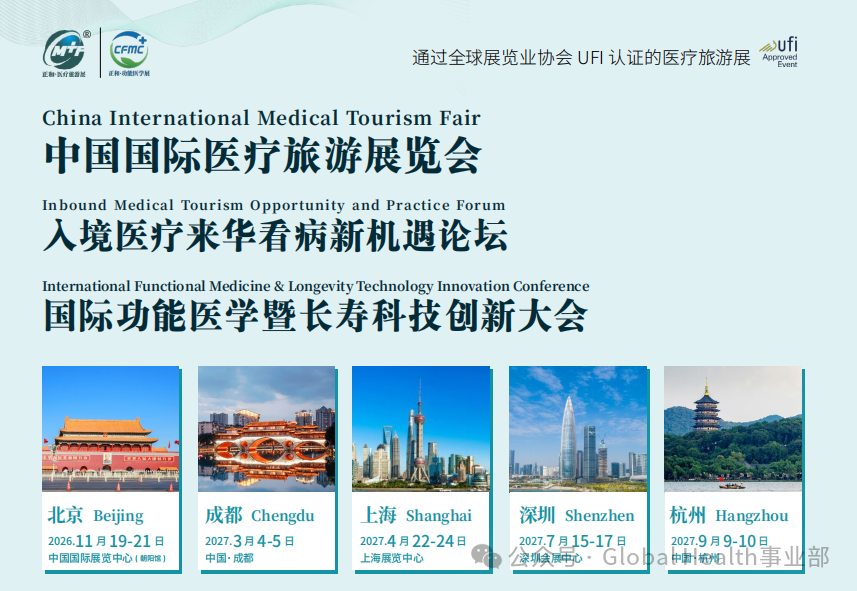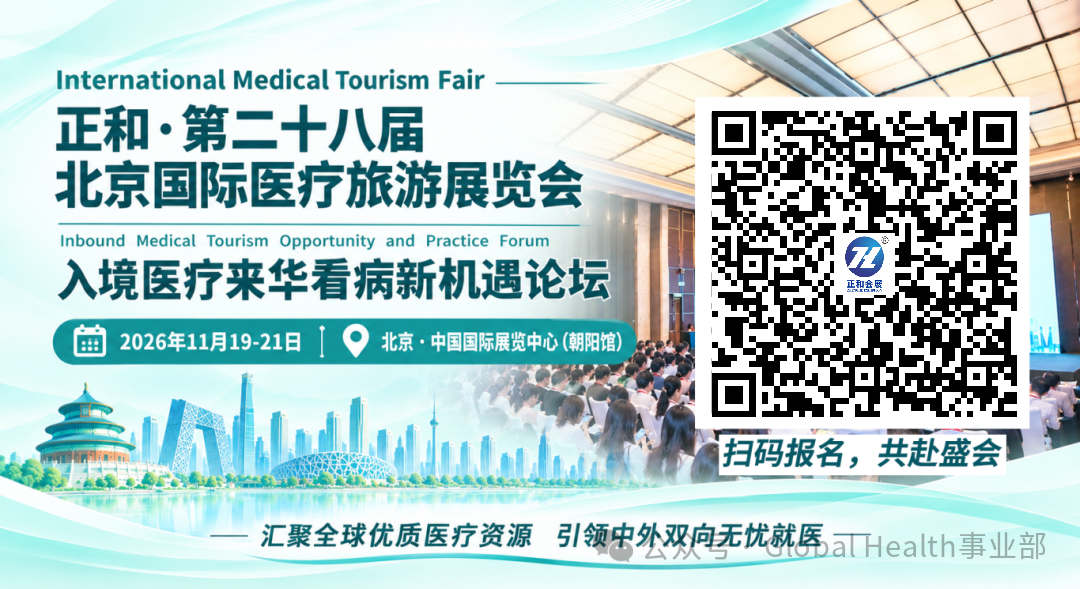
Join the Premier Healthcare Networking Event of the Year!
Looking to expand your footprint in the global medical market? Don't miss the Beijing International Medical Tourism and Health Conference, taking place this November 19-21 in Beijing, China. Connect directly with top-tier hospitals, biotech pioneers, and cross-border medical facilitators to explore groundbreaking opportunities in cell therapy, IVF, and longevity medicine. Mark your calendars and register today to shape the future of cross-border healthcare!

👆扫码联系主办方
Driven by rapid breakthroughs in cutting-edge medical technologies (such as CAR-T cell therapy) and highly competitive overall cost-effectiveness, China is rapidly becoming a new hotspot for global patients seeking cross-border healthcare. Beyond hardcore clinical innovation, comprehensive full-cycle services (such as multilingual team communication, long-term follow-up, and direct billing with international commercial insurance) serve as the core foundation for building trust in cross-border medical care.
To help global patients and cross-border medical institutions better connect with high-quality healthcare resources, CMTF has compiled an authoritative directory of large public and premium private hospitals in China capable of providing top-tier CAR-T cell therapy and high-quality international medical services:
[North China]
1. Institute of Hematology and Blood Diseases Hospital, Chinese Academy of Medical Sciences
City: Tianjin
Institution Type: National Grade 3A Specialized Public Hospital, National Clinical Research Center for Hematologic Diseases
Core Advantages: As the "national team" of hematology research in China, this hospital is a national leader in dual-target CAR-T engineering and immune-oncology protocol innovation. The hospital boasts multiple myeloma and leukemia specialty programs with extremely high patient volumes. It has led and participated in numerous cutting-edge CAR-T cell therapy clinical trials at home and abroad, serving as a core scientific research and clinical hub for conquering relapsed/refractory hematological malignancies.
2. Peking University People's Hospital
City: Beijing
Institution Type: Grade 3A Comprehensive Public Research Hospital
Core Advantages: Relying on the globally renowned "Peking University Institute of Hematology," this hospital is not only the birthplace of the "Beijing Protocol" for haploidentical bone marrow transplantation but also one of the world's largest centers for allogeneic hematopoietic stem cell transplantation. In the field of CAR-T therapy, the hospital has an extremely extensive portfolio of clinical trials and excels at managing the most complex hematological malignancies.
3. Lu Daopei Hospital
City: Beijing / Hebei (Yanjiao)
Institution Type: Renowned Private Specialized Hematology Hospital Group
Core Advantages: Founded by Academician Lu Daopei, the pioneer of hematopoietic stem cell transplantation in China, this is one of the most professional and largest hematology medical groups in the country. The hospital has a highly mature CAR-T cell immunotherapy team. Its greatest clinical distinction lies in seamlessly combining advanced CAR-T therapy with hematopoietic stem cell transplantation (bridging transplantation), providing a highly promising path to a cure for patients with advanced refractory leukemia.
4. Beijing GoBroad Boren Hospital
City: Beijing
Institution Type: Premium Private Specialized Hospital
Core Advantages: Affiliated with the GoBroad Healthcare Group, this hospital is highly experienced in utilizing gene sequencing technology for targeted therapies (e.g., targeting CD19, CD22, BCMA, etc.). The hospital features a dedicated international patient coordination channel. Its numerous CAR-T clinical research achievements have been repeatedly presented at top international academic conferences, such as the American Society of Hematology (ASH) annual meeting, earning deep recognition from the global industry.
[East China]
5. Ruijin Hospital, Shanghai Jiao Tong University School of Medicine
City: Shanghai
Institution Type: Grade 3A Comprehensive Public Hospital
Core Advantages: The Department of Hematology and the National Major Science and Technology Infrastructure for Translational Medicine at Ruijin Hospital constitute a top-tier lymphoma diagnosis and treatment center in China. The hospital's expert team led the large-scale real-world study of China's first commercial CAR-T product (Axicabtagene Ciloleucel Injection) for the treatment of relapsed/refractory non-Hodgkin lymphoma and issued China's first commercial CAR-T prescription, holding milestone significance in the formulation of standardized treatment protocols.
6. The First Affiliated Hospital of Soochow University
City: Suzhou, Jiangsu
Institution Type: Grade 3A Comprehensive Public Hospital
Core Advantages: Backed by the National Clinical Research Center for Hematologic Diseases and the Jiangsu Institute of Hematology, this hospital has a profound foundation in the precise diagnosis and targeted cell therapy of complex hematological malignancies. Its hematology team has repeatedly participated in and led large-scale CAR-T real-world application studies, making outstanding contributions to product approval, clinical adverse reaction management, and the establishment of long-term patient follow-up systems.
7. The First Affiliated Hospital, Zhejiang University School of Medicine
City: Hangzhou, Zhejiang
Institution Type: Grade 3A Comprehensive Public Hospital
Core Advantages: As a leading academic hematology center in East China, this hospital has a long history and massive data in the clinical research and treatment of leukemia, lymphoma, and multiple myeloma with CAR-T. The hospital excels in multidisciplinary treatment (MDT), providing patients with full-cycle safety assurance from cell preparation quality control to clinical infusion and complication management.
8. Jiahui International Hospital (Jiahui Health)
City: Shanghai
Institution Type: Premium Private International Hospital
Core Advantages: As the strategic partner hospital of Massachusetts General Hospital (MGH) in China, Jiahui International Hospital provides high-quality medical services that fully comply with international standards. The hospital not only offers advanced commercial CAR-T cell therapy for leukemia and lymphoma patients but also features a mature multilingual service team and a direct billing network with international commercial insurance, making it the preferred choice for expatriates and high-end individuals seeking cutting-edge medical care in China.
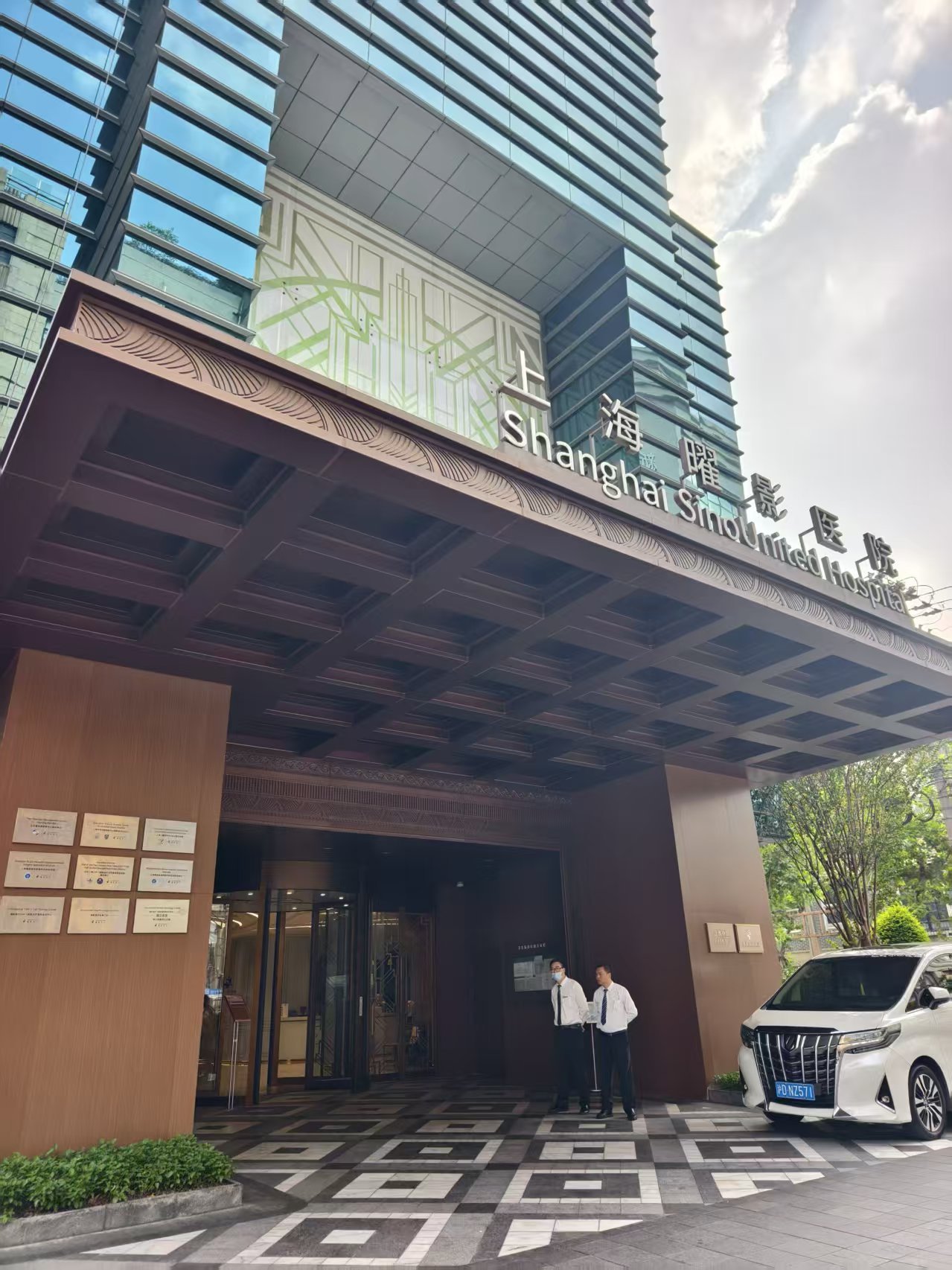
9. SinoUnited Health —— Newly Recommended
City: Shanghai / Hangzhou
Institution Type: Premium Private Healthcare Group
Core Advantages: SinoUnited Health is a premium healthcare brand co-founded by senior overseas-returnee and local medical experts, and is the official partner medical institution of the Mayo Clinic Care Network in China. In terms of complex disease and tumor management, SinoUnited Health relies on a robust international multidisciplinary treatment (MDT) model, dedicated to providing patients with precise diagnoses, personalized treatment plans, and full-life-cycle health management. Its outstanding bilingual medical team, strict international quality control system, and direct billing services covering mainstream global insurance greatly lower the communication and payment thresholds for international patients seeking cross-border medical care, playing a crucial role as an "international standard hub" in the premium medical tourism service chain.
[Central China]
10. Union Hospital, Tongji Medical College, Huazhong University of Science and Technology
City: Wuhan, Hubei
Institution Type: Grade 3A Comprehensive Public Hospital
Core Advantages: The Department of Hematology at Wuhan Union Hospital is a National Key Clinical Specialty, accumulating extremely rich practical experience in the field of CAR-T cell therapy. This center is not only one of the core bases for the clinical application of commercial CAR-T in China, but it has also reached an advanced international level in the clinical management and critical care emergency treatment of CAR-T therapy-related complications (such as Cytokine Release Syndrome, CRS).