Global Medical Tourism Destination Insights: Hong Kong, China
I. The System: An International Healthcare System Integrating East and West
Hong Kong's healthcare system is the perfect combination of a "high-welfare public sector + a top-tier market-driven private sector," which serves as the cornerstone for its residents' average life expectancy consistently ranking among the highest in the world.
1. The Public System: A Low-Cost "Safety Net"
Positioning: It covers all Hong Kong citizens and provides basic medical security.
Features: The costs are extremely low (hospitalization is only about 100 HKD per day), but the waiting times are long. For non-urgent specialist consultations or surgeries, the queue can last for several months.
Suitable Crowd: Local residents and patients with strictly limited budgets who are able to wait.
2. The Private System: An International "Fast Track"
Positioning: It serves high-net-worth individuals, international patients, and those with commercial health insurance.
Features: Zero waiting time, superior environments, excellent service, and doctors who frequently possess European and American practice backgrounds. This sector is the main battlefield for mainland patients seeking medical care in Hong Kong.
Unique Advantage: Within the same city, patients can enjoy private healthcare services fully aligned with Europe and the US, but with a significantly lower time cost than traveling there.
Many assume that the only advantage of Hong Kong's healthcare is its "internationalization." However, its truest core advantage lies in its capability to connect with global innovative medical resources. Simply put, Hong Kong may not necessarily have the highest number of hospitals globally, but it possesses international drug synchronization capabilities, an international physician system, global clinical standards, a global insurance ecosystem, and worldwide referral capabilities. This is the greatest core advantage of Hong Kong's healthcare.
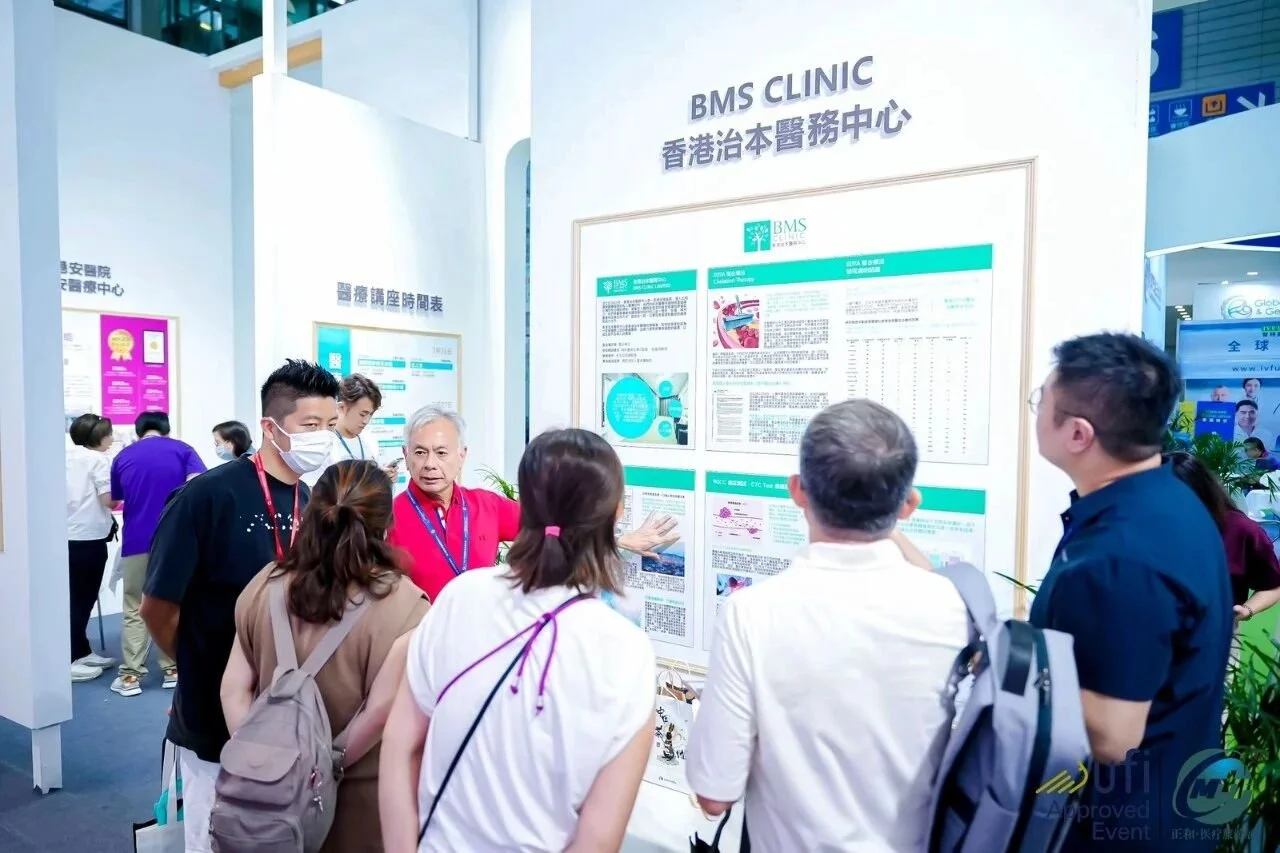
BMS@CMTF
II. Hardcore Technology + A Lineup of Internationally Renowned Hospitals
(1) What are the strong medical specialties in Hong Kong?
In cancer treatment, Hong Kong has upgraded from a "drug transit hub" to a "technology origin site." First, in terms of medications—which is what international patients care about most—such as anti-cancer drugs, rare disease drugs, targeted therapies, and immunotherapy drugs. Hong Kong's drug approval process adopts international standards (US FDA, European EMA). Many new drugs are typically available in Hong Kong within months after their international launch. For patients urgently needing imported medications, this is the closest "imported drug warehouse" to the mainland.
Many doctors in Hong Kong's international hospitals have backgrounds from the UK, the US, and Australia. At the same time, it has long adopted international cancer treatment guidelines, possesses mature MDT (Multi-Disciplinary Treatment) practices, and strongly emphasizes formulating treatment plans across multiple disciplines—such as medical oncology, radiation oncology, surgery, and pathology—which is very close to the European and American systems.
Additionally, in the fields of cardiovascular care and organ transplantation, Hong Kong holds a very strong label within the Asian medical circle, particularly in cardiac surgery, liver transplantation, and minimally invasive surgery. Furthermore, pediatrics and rare diseases are fields often overlooked by many, but in reality, Hong Kong engages in extensive international cooperation in these areas. Specifically, systems like the University of Hong Kong and the Chinese University of Hong Kong maintain long-term partnerships with European and American research institutions.
In the field of assisted reproduction, while Hong Kong's scale may not be as large as that of Thailand or Japan, it has its own distinct characteristics, such as "standardization." Hong Kong's reproductive medicine features strict supervision, high laboratory standards, and standardized medical ethics, which is why many high-net-worth families choose Hong Kong.
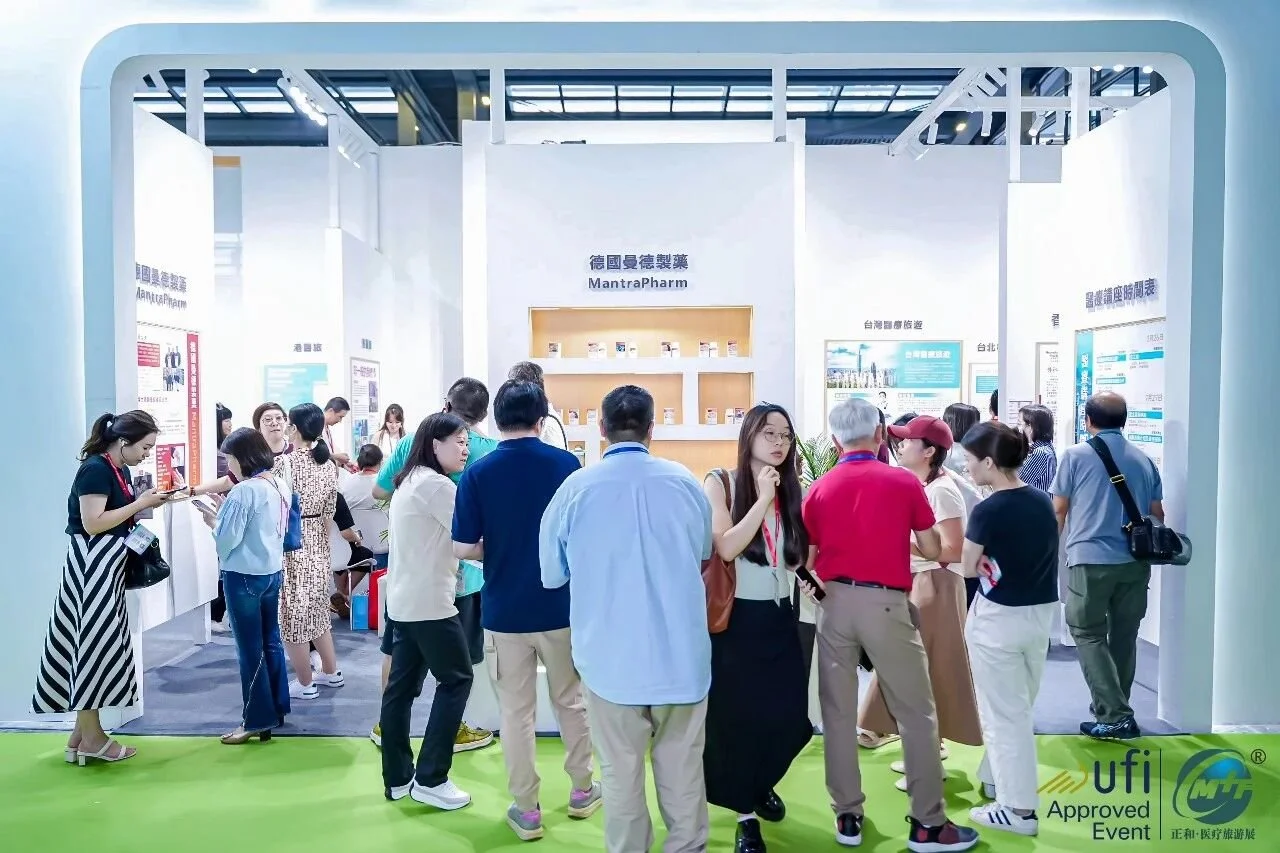
MantraPharm@CMTF
(2) A Gathering of Numerous Renowned Hospitals
Hong Kong's public healthcare is remarkably strong, handling the majority of complex and severe cases, teaching, research, and major surgeries with outstanding capabilities. Moreover, Hong Kong's public hospitals have long held high global rankings, but the problem is also obvious: long queues. Therefore, international patients more frequently interact with Hong Kong's private healthcare sector. Hong Kong's private healthcare is like the "Asian version of British private healthcare," where many entrepreneurs, celebrities, and international families manage their health long-term.
Although the region is not large, Hong Kong actually gathers many renowned hospitals in Asia. For example, Hong Kong Sanatorium & Hospital is one of the most famous private hospitals in Hong Kong, familiar to many high-net-worth families, celebrities, and entrepreneurs. Gleneagles Hospital Hong Kong is one of the most highly internationalized private hospitals in Hong Kong in recent years, with its biggest feature being "Singapore-style international healthcare." Union Hospital is known for its "signature" specialties like obstetrics, gynecology, and assisted reproduction. Hong Kong Adventist Hospital is recognized for its highly private environment and good service reputation. The University of Hong Kong-Shenzhen Hospital is a paradigm of Shenzhen-Hong Kong cooperation and a vital hub for cross-border healthcare.
Of course, Hong Kong's excellence is not limited to private healthcare; the core of its medical strength also lies in many public systems, such as Queen Mary Hospital, Prince of Wales Hospital, Queen Elizabeth Hospital, and Princess Margaret Hospital.
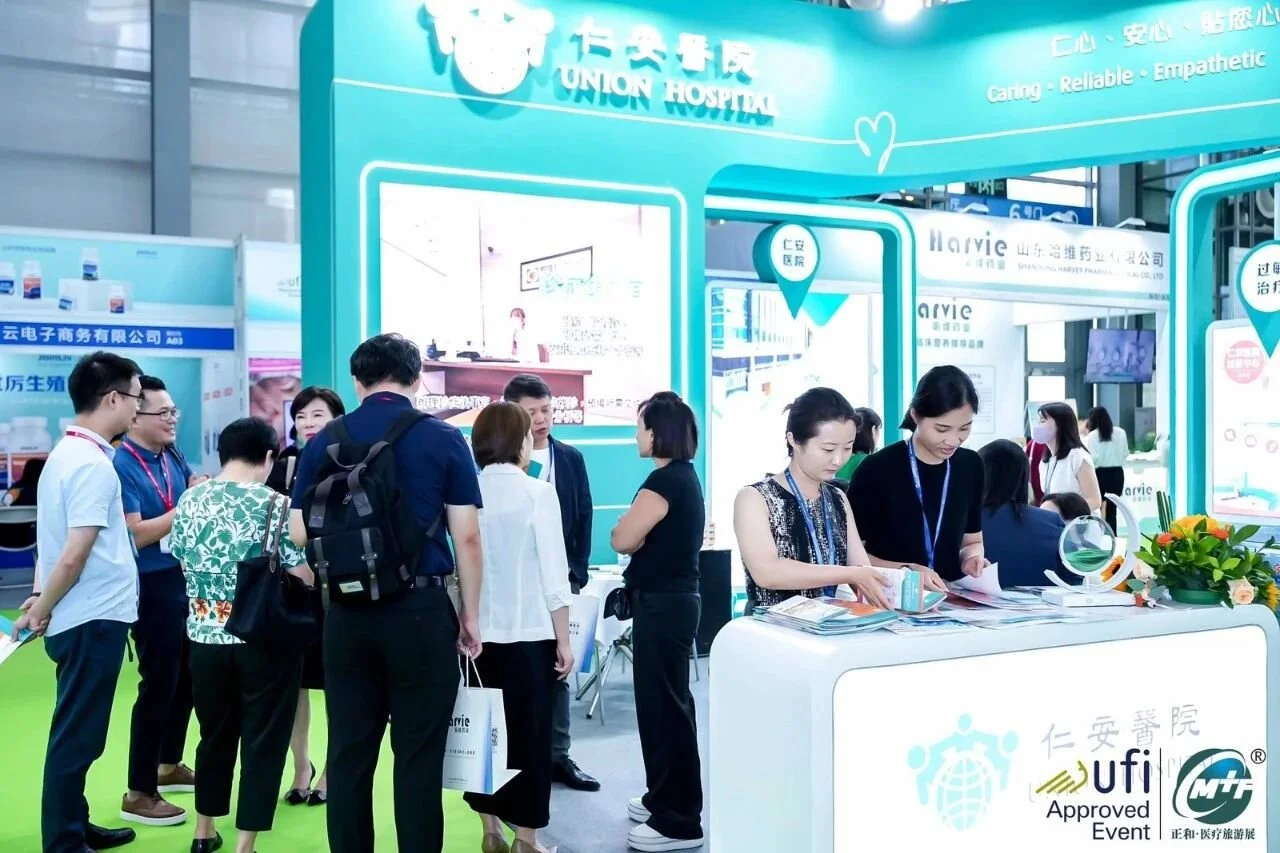
Union Hospital@CMTF
III. Cost: Cheaper than Europe and the US, but not "Budget"
Hong Kong's healthcare represents "highly cost-effective international healthcare."
Hong Kong is about 1/2 the US price, with no long-haul flights required.
Note: The above table is for reference only and does not represent actual medical expenses.
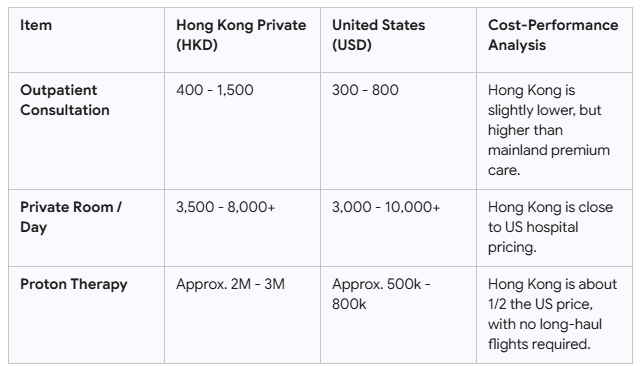
For fully self-paying patients, the total cost of complex cancer treatments (including proton therapy) is roughly 1.5 million to 3 million RMB. However, patients with high-end commercial medical insurance face a much lighter financial burden, as the majority of these costs can be covered.
Objectively speaking, Hong Kong's healthcare is not "perfect." Its prices are still on the higher side, and due to limited land in Hong Kong, its total volume of large-scale medical resources is not as massive as that of the US or Japan, making it unsuitable for all patients. Hong Kong's most important future positioning may not be simply as a standalone medical center, but as a "bridge connecting China to the international medical system."
Especially in areas such as innovative drugs, precision medicine, genetic technology, international insurance, and cross-border healthcare, promoted by favorable factors like the integration of the Greater Bay Area, the development of Hong Kong's Northern Metropolis, and Shenzhen-Hong Kong medical collaboration, Hong Kong may form an "international medical + Chinese market" dual-way hub in the future.
Hong Kong's healthcare stands precisely in a unique position; it is both internationalized and aligned with Europe and the US, while simultaneously being very close to the mainland with highly convenient Chinese communication. To some extent, Hong Kong, China is like a "connector in the Asian medical world."
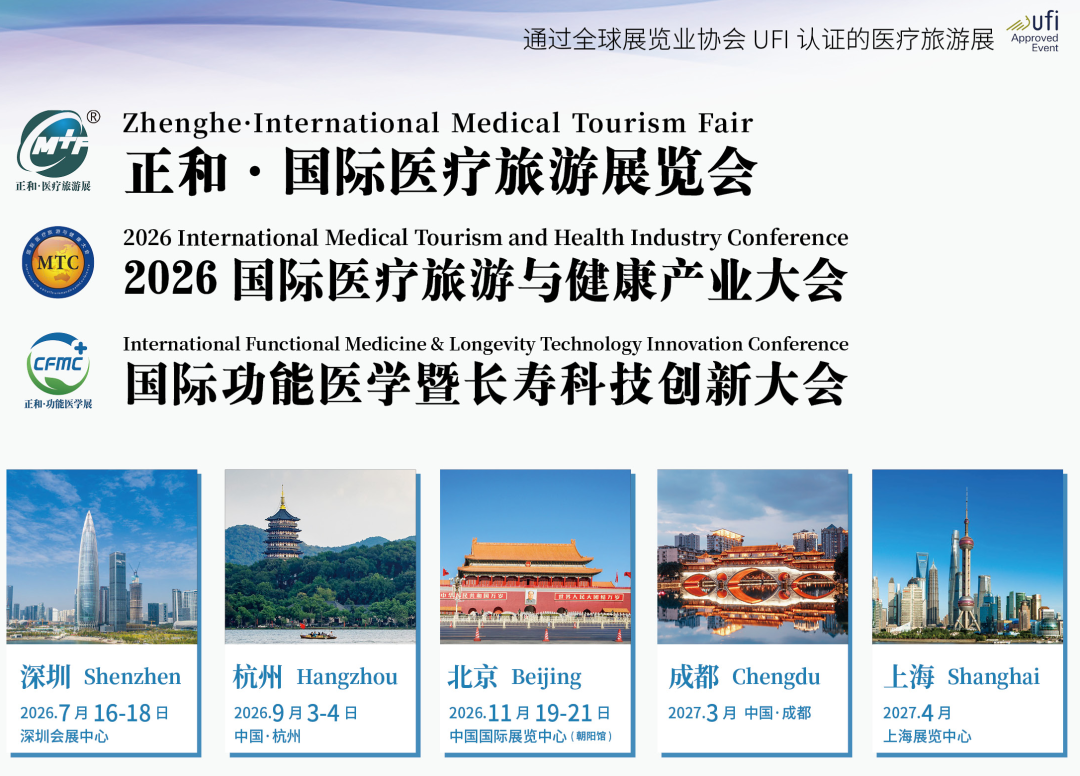
Beyond Dental Care: Discovering the 27th Shenzhen International Medical Tourism Exhibition
As China's healthcare ecosystem continues to evolve, the services available to expats extend far beyond exceptional dental care. For those interested in the broader landscape of premium cross-border healthcare, the upcoming 27th Shenzhen International Medical Tourism Exhibition is a landmark event worth paying attention to.
Scheduled for July 16-18, 2026, this major exhibition serves as a crucial bridge connecting global medical resources with the Greater Bay Area. Here is why it stands out for the international community:
Comprehensive Healthcare Showcases: The event gathers top-tier international hospitals, specialized expat-oriented clinics (including dentistry and Traditional Chinese Medicine), and wellness centers. It offers a panoramic view of the premium medical resources available both in China and abroad.
Frontier Medical Technologies: Attendees can explore the latest advancements in medical equipment, AI-assisted treatments, and high-end health management solutions that are setting new global industry standards.
Insurance and Direct Billing Insights: It is an excellent platform for understanding the latest trends in international health insurance, cross-border claims, and direct billing networks, which are vital components for the expat community's peace of mind.
For expatriates, healthcare professionals, and industry stakeholders, this exhibition is more than just a trade fair—it is a window into the future of borderless, high-quality medical experiences. It further cements South China's reputation as a region dedicated to providing world-class, accessible, and "home-like" healthcare for its international residents.
Join us at our upcoming stops and secure your booth today:
👉 Next Stop: July in Shenzhen
👉 Future Dates: November in Beijing | March in Chengdu
👉 Contact us for speaking/exhibiting: +86-13570219945 (Phone & Whatsapp& WeChat)