Legal Cross-Border Drug Purchasing: What Can Shenzhen's "Medicine and Equipment Connect" Bring? And What Can't It?
As the demand for health management continues to rise, the need for high-quality overseas medications is growing rapidly. Topics like "cross-border purchasing of anti-cancer drugs" and "direct mailing of overseas new drugs" frequently trend online. On one side is the genuine need of patients for innovative drugs, original drugs, and rare disease medications ; on the other side is an underground market fraught with risks, such as illicit purchasing agents, gray-market customs clearance, and social media drug sales.
In Shenzhen, the city closest to Hong Kong with the most active cross-border healthcare sector, the "Hong Kong and Macau Medicine and Equipment Connect" (hereinafter referred to as "The Connect") is becoming a high-frequency buzzword. Many people wonder: Does this mean all Hong Kong medicines can now be freely used in Shenzhen? The reality is not quite that simple. Today, let's dive into what "The Connect" is, why it emerged, what specific problems it solves, as well as its limitations and common misconceptions.
I. Why Does Cross-Border Drug Purchasing Persist?
Many international innovative drugs are often launched first in the US, Europe, or Hong Kong, China. Entering the Chinese mainland requires going through registration, approval, medical insurance negotiations, and clinical access processes. This creates a time gap.
For patients with cancer, rare diseases, and autoimmune diseases, "waiting" itself is the biggest cost. Consequently, over the past decade or so, a massive "cross-border drug purchasing ecosystem" has formed in China: purchasing through Hong Kong pharmacies, overseas direct shipping, friends and family bringing drugs from abroad, medical tourism incidental purchases, underground "smuggled drugs," and community group buying.
These channels are driven by genuine needs but are mixed with massive risks: counterfeit drugs, cold chain failures, unknown origins, lack of traceability, absence of medical supervision, and no accountability for medication risks. Moreover, many ignore the fact that the legal nature of "carrying a small amount for personal use" is entirely different from commercial cross-border drug sales.
II.
What Exactly is the "Hong Kong and Macau Medicine and Equipment Connect"?
"The Connect" is essentially a special medical channel under official supervision, created to address the pain points of compliant cross-border drug purchasing. In 2020, the National Medical Products Administration issued the Work Plan for Regulatory Innovation and Development of Drugs and Medical Devices in the Guangdong-Hong Kong-Macao Greater Bay Area. This allowed designated medical institutions in the Greater Bay Area, upon approval, to use clinically urgently needed drugs already launched in Hong Kong and Macau, as well as advanced medical devices already procured and used by public hospitals there.
Simply put: It is not "all Hong Kong drugs can enter the mainland," but rather a limited opening for "specific hospitals + specific patients + specific drugs/devices.". Guangdong Province officially implemented "The Connect" in 2021. By early December 2025, the number of designated medical institutions reached 71. A total of 140 varieties of Hong Kong and Macau drugs and medical devices (63 drugs, 77 devices) had been approved for import and use, benefiting approximately 17,000 patients.
III.
Why Has Shenzhen Become the Core City for "The Connect"?
Shenzhen naturally possesses several key advantages:
Closest Proximity to Hong Kong: Hong Kong is one of Asia's most important launchpads for new drugs. Many international innovative drugs debut in Hong Kong, giving Shenzhen a natural cross-border medical synergy advantage.
Mature Foundation of Hong Kong-Funded Hospitals: The most typical example is The University of Hong Kong-Shenzhen Hospital (HKU-SZH), which was also one of the first pilot hospitals for "The Connect.". Later, Shenzhen added multiple designated institutions, including the Shenzhen Qianhai Shekou Free Trade Zone Hospital, Shenzhen Hezheng Hospital, and Shenzhen University General Hospital.
Pioneering Policies of the Greater Bay Area: "The Connect" is fundamentally an important experiment in Guangdong-Hong Kong-Macao medical integration. It is not just a medical issue, but also part of institutional innovation, drug regulatory synergy, medical opening-up, and the interoperability of international medical resources.
IV.
What Problems Does "The Connect" Actually Solve?
This is the most critical question.
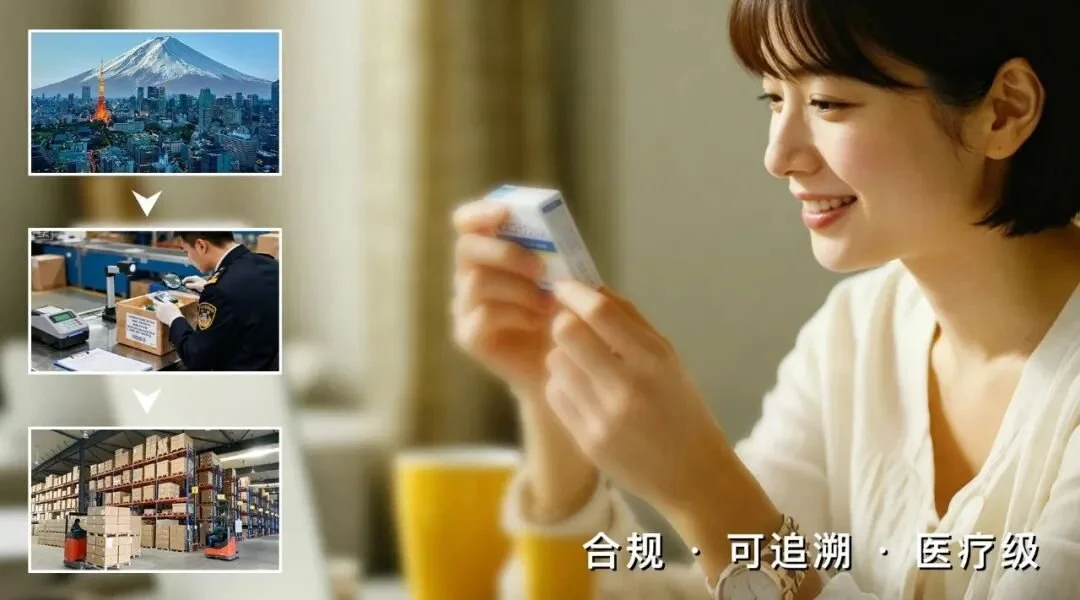
Bringing "Gray Demand" Back Under Regulation: In the past, patients relied on unauthorized agents ; now, they can legally use certain Hong Kong and Macau drugs and devices in designated hospitals under a doctor's supervision. This ensures traceability, cold-chain supervision, medication management, adverse reaction tracking, and clear medical liability. For patients with tumors, rare diseases, ophthalmologic, and neurological disorders, this is incredibly significant.
The Dividend of Bridging the "Time Gap" for Life-Saving Drugs: It shortens the time it takes for international innovative drugs to reach mainland patients. Even if some international innovative drugs have not yet officially entered the mainland market, patients may benefit early through "The Connect.". For rare disease and oncology patients, this is a vital tool for buying time. This is why the industry calls it "the outpost for innovative drugs entering the Chinese market."
The Possibility of "Legalized" Expense Reimbursement: Although most new drugs remain self-funded, breakthroughs have begun in certain projects. For instance, some "Connect" items at HKU-SZH have been included in the reimbursement scope of Shenzhen Medical Insurance or "Shenzhen Huiminbao," providing financial attributes that gray areas simply cannot offer.
V. Limitations and Misconceptions of "The Connect"
Many people misunderstand that "The Connect" means moving Hong Kong pharmacies into Shenzhen. It must be clarified that "The Connect" has very strong restrictive conditions:
Not All Drugs Are Included: Only varieties within the Catalog of Clinically Urgently Needed Imported Hong Kong and Macau Drugs and Medical Devices can be used. They must meet the criteria of being clinically urgent and already launched in Hong Kong/Macau. It is not "all drugs in Hong Kong.". For patients whose required drugs are not in the catalog and who cannot travel abroad, they can only rely on personal channels to carry a small amount for self-use, strictly adhering to customs' "reasonable personal use" limits.
Not Available in All Hospitals: It can only be used within designated medical institutions. It is not available in ordinary pharmacies, social circulation, or e-commerce platforms.
Not for Casual Purchase by Patients: Many of these drugs require specialist management, doctor evaluation, specific indications, and dedicated patient use. It is not a matter of "getting a prescription and taking the drug home to stockpile."
Not Equivalent to "Fully Opening Up Imported Drugs": "The Connect" remains a specially regulated policy ; it is not free trade, nor is it a deregulation of drug control.
How Can Patients Buy the Drugs They Need Compliantly?
Step 1: Check the Catalog: Search the Catalog of Clinically Urgently Needed Imported Hong Kong and Macau Drugs and Medical Devices for the Nine Mainland Cities of the Greater Bay Area to see if your required drug is listed.
Step 2: Find a Hospital: Select an official designated institution.
Step 3: Prepare Materials: Bring mainland medical records, pathology reports, and imaging data to the hospital for evaluation, or go directly to the designated hospital for consultation/examination. The drug will only be prescribed after a doctor confirms a "clinical urgent need."
VI.
Where is "The Connect" Heading in the Future?
At present, the direction is very clear:
Applicable Varieties Will Continue to Expand: Official data shows that the policy's coverage is consistently growing.
More Designated Hospitals: What started as a single pilot has expanded to multiple hospitals across the Greater Bay Area.
Shenzhen May Become China's "International Medical Interface": This is Shenzhen's most noteworthy aspect in the cross-border healthcare field. It is not just a "city for seeing a doctor," but is likely to become an entry point for international innovative drugs, a Greater Bay Area medical synergy center, and an experimental zone for medical opening-up systems.
Conclusion: What Truly Matters is Not Just "Buying the Drug"
Many focus on where to buy foreign drugs, but what the medical industry truly cares about is whether patients can access the right medications within a safe, regulated, and sustainable system. The significance of "The Connect" goes beyond imported drugs; it is attempting to establish a new order for cross-border healthcare. Between gray-market agents and complete closure, China is finding a new model: one that is regulated, traceable, risk-controllable, and partially open—and Shenzhen is becoming the most cutting-edge testing ground for this model.
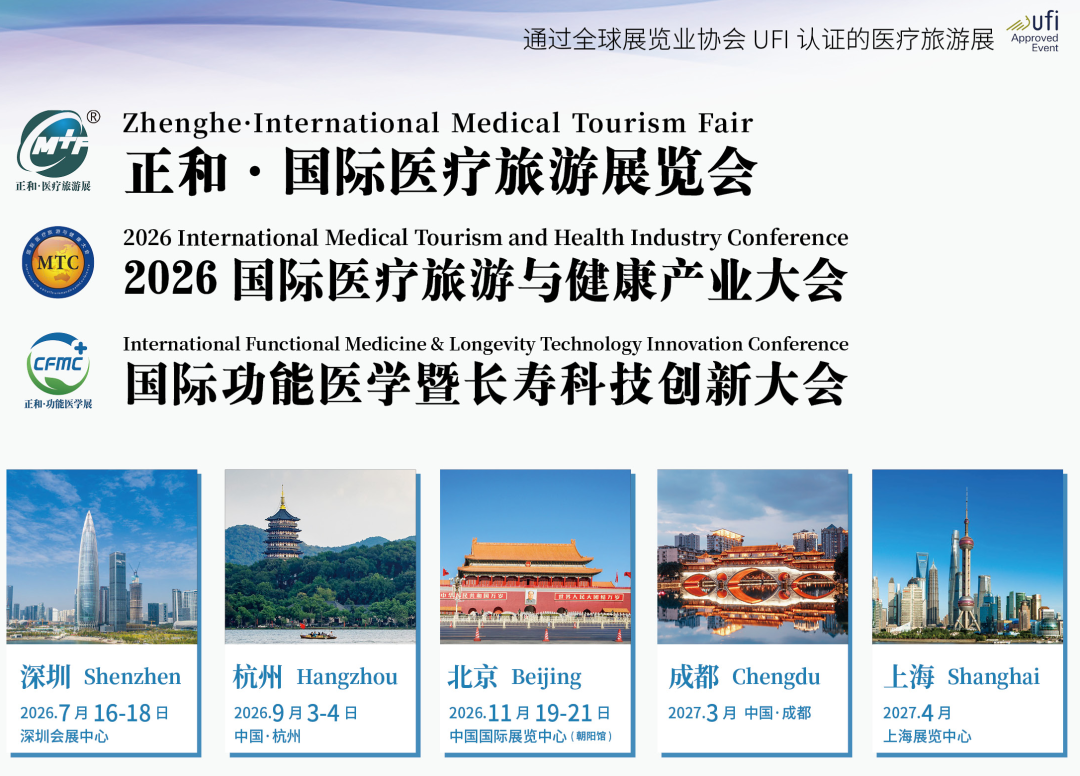
Join us at our upcoming stop in Shenzhen this July!
Contact Us to Exhibit: +86-13570219945 (Phone & WeChat & Whatsapp)